
Why 2026 Is the Year of the Digital Side-Hustle in Ghana
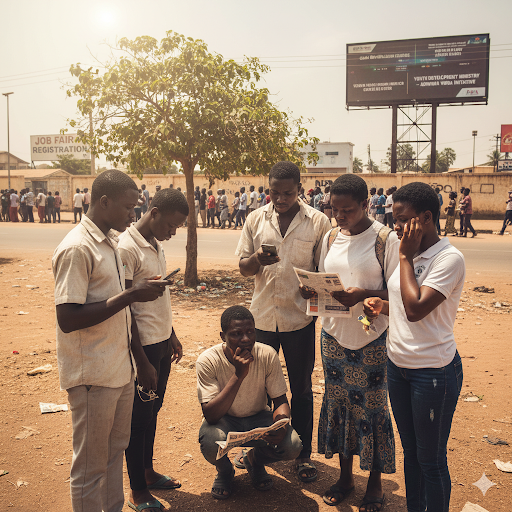
It is 2026. You have completed National Service, apprenticeship and training. You have your degree, your Ghana Card, your CV, cover letter and your ambition. Yet the job market feels slower than your expectations.
You are not alone.
Across Ghana, thousands of young people are navigating the gap between qualification and opportunity. The traditional employment pathway graduate, serve, apply, wait still exists. But the timeline has stretched. The competition has intensified. And the certainty has declined. At the same time, something powerful is happening beneath the surface. Digital work and it is no longer optional. It is structural. And 2026 marks a turning point. Probably for you.
The National Moment: Why 2026 Feels Different
If you pause and look closely, 2026 does not feel like an ordinary year. There is a shift in the air. Conversations about jobs are no longer just about vacancies; they are about skills. They are about digital capability. They are about adaptability.
Three forces are quietly but powerfully shaping this moment.
1. Policy Is Pointing Digital
Across Ghana, national conversations are increasingly centered on digital literacy, coding, youth employment, and technology-driven productivity. Government-backed initiatives are no longer abstract ideas as government itself has taken the steps to introduce the programmes such as the one million coders programme aimed at training youth in tech. This is how you know policy has become practical and when policy becomes practical and begins to lean in a particular direction, markets usually follow. Businesses adjust. Employers adjust. Training institutions adjust.
If the country is moving digital, it is not wise to remain analog.
2. Artificial Intelligence Has Changed the Entry Game
Five years ago, launching a digital service required deep technical knowledge. You either studied it formally or you stayed out. That wall is no longer there.
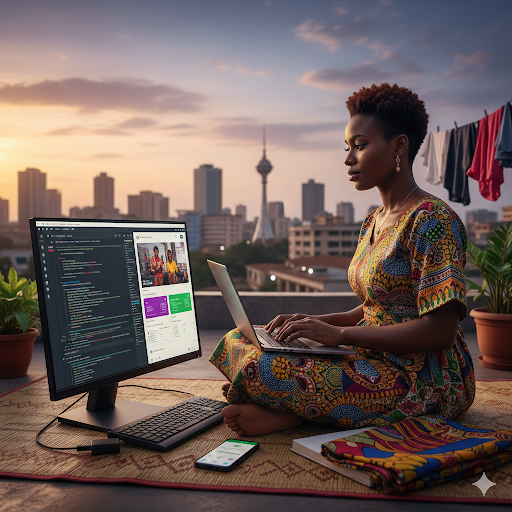
Today, AI tools have dramatically lowered the barrier to entry. A young person with a smartphone, stable internet access, and structured training can now perform tasks that previously required an entire team.
You can draft professional content.
You can design marketing materials.
You can transcribe interviews.
You can schedule and analyze social media performance.
The tools are available.
AI is not here to replace any (Ghanaian) youth.
It is here to multiply the productivity of those who are willing to learn.
3. The Waiting Period Is Getting Longer
Let’s speak plainly.
After National Service, many young people enter what feels like a holding pattern. Applications go out. Responses are slow. Financial pressure builds quietly.
This is where many fall into the NEET (Not in Education, Employment, or Training) category. The digital side-hustle emerges not as a trend, but as a bridge.
A bridge between qualification and opportunity.
A bridge between waiting and earning.
The Digital Side-Hustle: What It Really Means
Let’s clear something up.
A digital side-hustle is not a shortcut to sudden wealth. It is not speculation. It is not gambling on viral trends.
It is structured, skill-based income generation using digital platforms and tools while you continue searching for formal employment or building a long-term venture.
It gives you:
- Financial breathing room
- Practical experience
- A growing portfolio
- Market exposure
- Entrepreneurial confidence
For some, it remains supplementary income.
For others, it quietly grows into a full enterprise.
What matters is that it restores control.
AI as a Tool, Not a Threat
There is understandable anxiety about artificial intelligence. Headlines often frame it as a job destroyer.
The reality is more balanced. AI replaces repetitive tasks. It rewards strategic users.

Today, a young Ghanaian can use:
- Claude or ChatGPT to draft structured content
- Canva AI to design flyers and social posts
- Midjourney for early-stage brand visuals
- Otter.ai to transcribe meetings or interviews
- Scheduling tools to ensure posts reach audiences at the right time
One individual, equipped with these tools, can operate with the efficiency of a small agency.
The competitive advantage no longer lies in mastering complex code.
It lies in understanding how to apply available tools effectively.
High-Impact Digital Side-Hustles in Ghana (2026)
The opportunities are not theoretical. They are already visible across communities.
1. Social Media and Digital Management
Walk into any pharmacy, printing shop, private school, or boutique in Ghana. Many have social media pages but not many manage them strategically.
This is where opportunity lives.
Services include:
- Creating consistent content
- Managing pages professionally
- Responding to customer inquiries
- Tracking performance and engagement
The logic is simple: when posts reach more people, businesses attract more customers. When revenue grows, your value becomes measurable.
And measurable value retains clients.
2. AI-Assisted Data Entry and Virtual Assistance
Many organizations need administrative support but cannot commit to full-time hires.
This gap creates space for digital assistants.
Tasks now include:
- Organizing spreadsheets
- Cleaning datasets
- Drafting structured reports
- Managing digital calendars
- Handling client communications
AI accelerates the heavy lifting. Human oversight ensures quality and reliability.
That combination increases output and income.
3. Transcription and Documentation Services
Researchers, legal practitioners, churches, NGOs, and content creators require accurate documentation. Transcription, once slow and manual, has evolved.
AI reduces typing time.
The freelancer focuses on editing, formatting, and accuracy.
Higher efficiency means more completed projects per week. More projects mean better earnings.
4. Digital Marketing for Local Businesses
Traditional businesses are beginning to understand something important: visibility drives sales. Managing Instagram and Facebook pages, running targeted ads, designing simple brand identities, and producing short promotional videos are no longer optional luxuries.
They are business necessities. And the demand is local. Immediate. Accessible.
The Ghanaian Question: “But How Do I Get Paid?”
Let’s bring this home.
Opportunity only matters if it translates into income you can access.
Fortunately, payment systems have matured.
- Mobile Money (MoMo) has become a trusted and seamless payment channel.
- Many local clients prefer direct MoMo transfers.
- International freelancing platforms increasingly support payment structures compatible with Ghana.
In 2026, the distance between digital work and your MoMo wallet is shorter than ever.
Income generation is no longer blocked by payment friction.
Managing the Cost of Data
Now, another reality: data is expensive.
Ignoring this would make the conversation unrealistic.
Smart digital workers manage cost strategically:
- Using midnight bundles for heavy uploads
- Leveraging Regional Digital Centres where available
- Batching content creation to reduce daily internet usage
- Editing offline before uploading final outputs
Effective digital work is not about being online every minute. It is about being efficient with your connectivity.
2026 is not defined by hype.
It is defined by accessibility.
The tools are available.
The payment systems are ready.
The demand exists.
The real question is not whether the digital side-hustle works.
It is whether you are prepared to move from scrolling to structured earning.
YDP Ghana Spotlight: Abdulghafar’s Transition from Scrolling to Earning
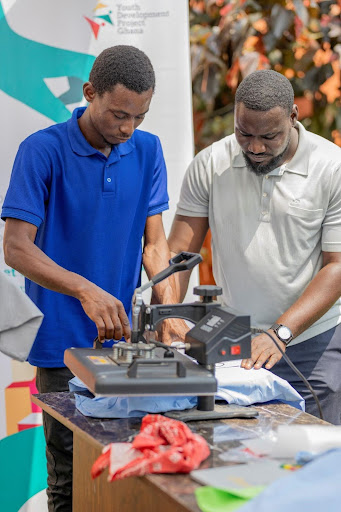
Abdulghafar was a beneficiary of the YDP Ghana’s Quick Learn, Quick Earn Skills Programme.
Before training, he had social media accounts. Like many young people, he used them primarily for scrolling.
Through the programme, he learned two practical skills:
- T-shirt printing
- Social media and digital management
The transformation was strategic. Instead of viewing social media as entertainment, he repositioned it as a marketing engine.
He began:
- Managing his own pages consistently
- Showcasing his printed shirts
- Increasing brand visibility
Today, Abdulghafar markets his printed apparel at his own pace and visibility. His structured online presence has earned him contracts and steady income.
The accounts existed before.
The skill application did not.
That difference changed his income trajectory.
Side-Hustle vs. Full-Time Employment: A Strategic Balance
The digital side-hustle is not a rejection of formal employment.
It is a resilience strategy. It allows young people to:
- Finance professional development
- Reduce financial dependency
- Support family responsibilities
- Build capital for future ventures
In uncertain employment cycles, diversified income streams create stability.
Why This Moment Matters
Search trends consistently show high interest in making money online in Ghana. However, the shift in 2026 is from speculative schemes to structured, skill-based digital work.
The side-hustle economy is becoming formalized. Businesses expect professionalism:
- Clear deliverables
- Measurable outcomes
- Transparent pricing
- Consistent communication
This is not informal hustle culture. It is emerging digital entrepreneurship.
The Strategic Outlook
Globally, digital service exports, remote work, and AI-assisted productivity continue to expand. Emerging economies that align youth development with digital capability will benefit most.
For Ghana, the opportunity is significant:
- A youthful population
- High mobile penetration
- Growing digital literacy
- Expanding policy focus on technology
The macroeconomic signals are clear and youth who adapt early gain advantage.
The Hard Truth
Waiting passively for opportunity is no longer sufficient.
The pathway now looks like this:
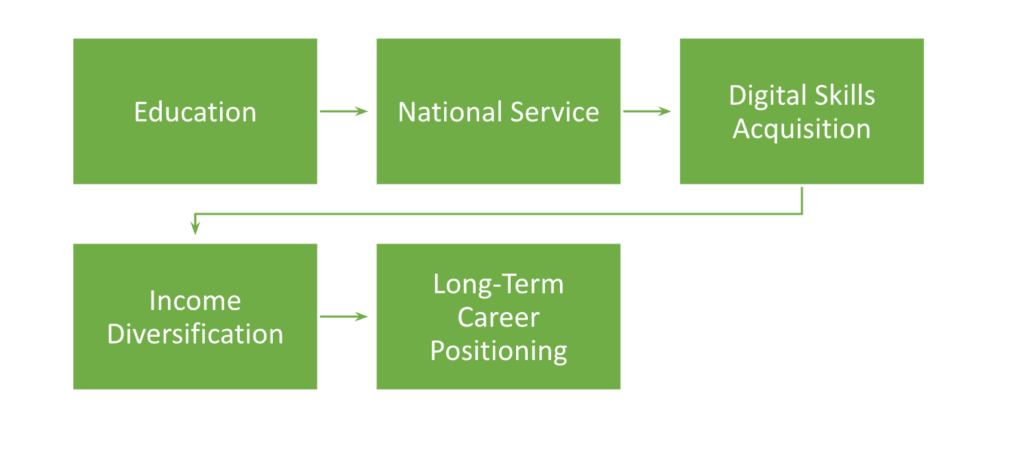
The digital side-hustle is not a fallback. It is a forward-thinking strategy.
Turning Your Smartphone into Infrastructure
In 2026, a smartphone is not just a communication device.
It is:
- A marketing platform
- A design studio
- A client management system
- A payment gateway
- A business incubator
The difference lies in usage. Scrolling consumes time. Skill application converts time into income.
Call to Action
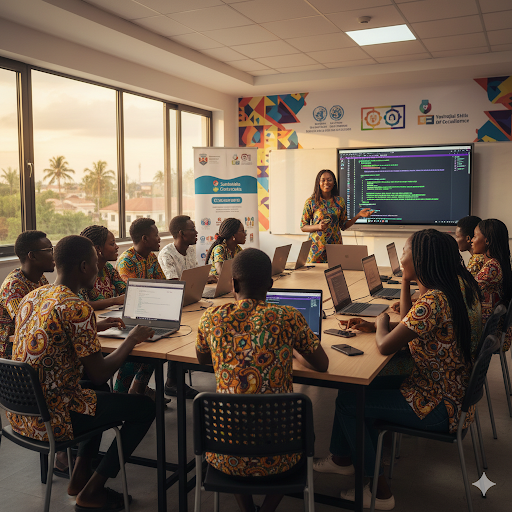
If you are ready to move from waiting to building, from scrolling to earning, and from uncertainty to strategic growth:
If you are ready to move from waiting to building, from scrolling to earning, and from uncertainty to strategic growth:
Register for Cohort II of the YDP Ghana Digital Skills Training Programme https://ydpghana.org/digital-skills-development-training-cohort-ii-registration/
In Cohort II, participants receive structured training in:
- Graphic Design and Visual Communication
- Digital Design and Creative Media
- Digital Marketing and Social Media Management
- AI-Digital Productivity and Creative Production
- GIG Economy and Digital Work Skills
Our training equips you with:
- Practical, income-generating digital skills
- AI tool integration techniques
- Client acquisition strategies
- Local payment systems knowledge
- Cost-efficient digital work models
2026 is not simply another calendar year.
It is a window.
The question is not whether the digital economy is growing.
It is whether you are positioning yourself within it.
YDP Ghana is committed to ensuring that Ghanaian youth are not spectators in the digital economy but active participants shaping it.