
The Psychology of Financial Behaviour Among Youth
By YDP Ghana
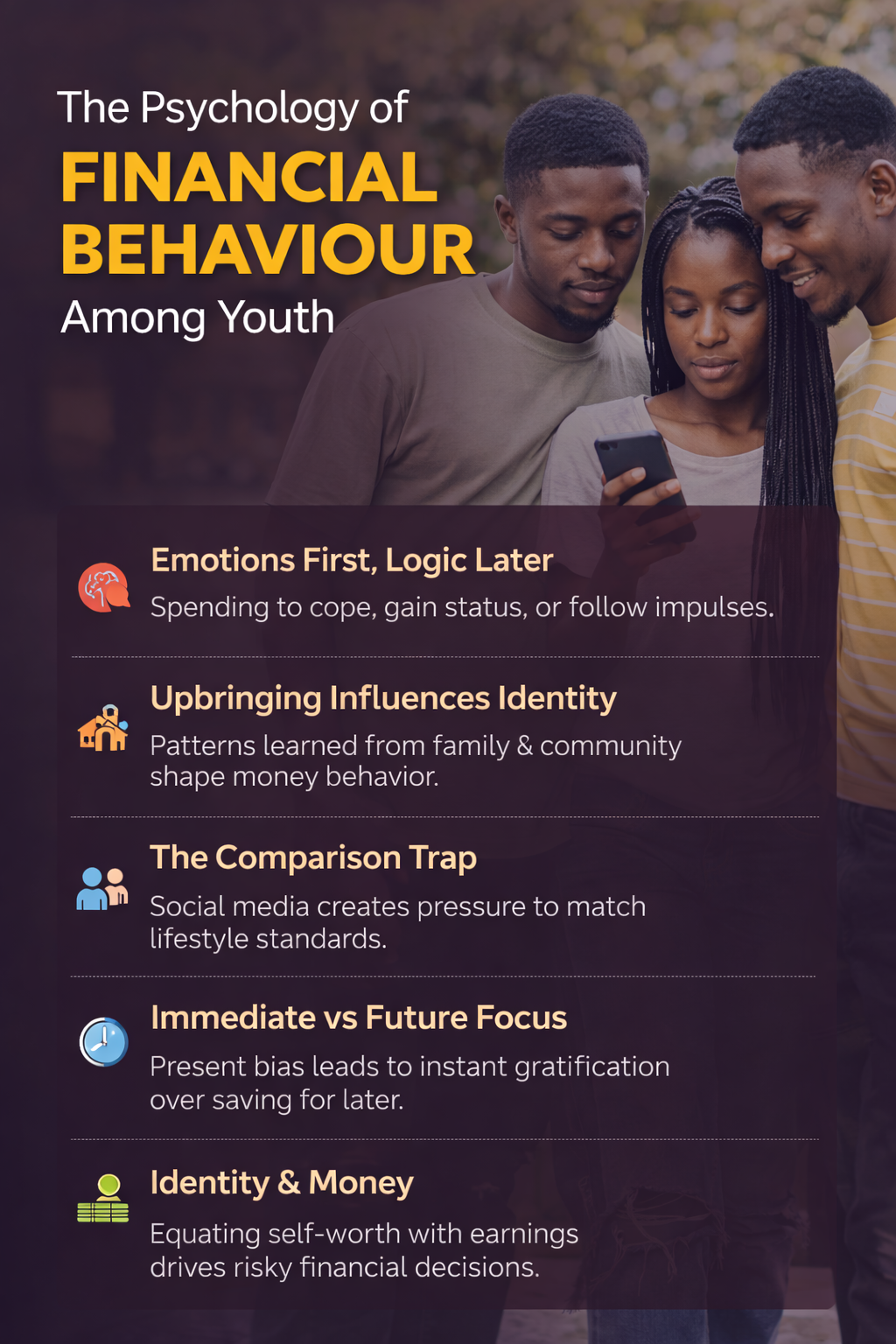
When conversations about youth and money come up, the focus is often on income unemployment rates, side hustles, salary levels, and economic hardship.
But income is only part of the story.
Two young people can earn the same amount and end up in completely different financial positions within five years. The difference is rarely intelligence. It is rarely opportunity alone. More often, it is psychology.
Financial behaviour is deeply emotional, shaped by beliefs, environment, identity, and social influence. Until we understand this, financial literacy efforts among young people will remain incomplete.
- Money Decisions Are Emotional Before They Are Logical
Many financial decisions are not calculated; they are felt.
Young people spend to celebrate, to cope, to belong, or to signal progress. Emotional triggers such as stress, peer comparison, social media exposure, or sudden income increases often override long-term thinking.
Impulse purchases, lifestyle inflation, and debt accumulation are frequently emotional responses not financial strategies.
Understanding this is critical. Budgeting tools alone do not change behaviour. Awareness does.
- Upbringing and Environment Shape Financial Identity
A young person’s relationship with money often begins long before they earn their first salary.
If money was scarce growing up, they may develop anxiety-driven saving habits or fear-based spending patterns. If money was rarely discussed, they may lack financial confidence. If spending was used to demonstrate success, consumption may become tied to identity.
Cultural and community expectations also matter. In many societies, young earners feel pressure to support extended family, maintain appearances, or meet social milestones early.
Financial behaviour is therefore not just individual; it is social.
- The Influence of Social Comparison
Today’s youth operate in a digital environment where success is constantly displayed.
Luxury, travel, business wins, and lifestyle upgrades are visible daily. This exposure subtly shifts standards and expectations. It can create urgency to “keep up,” even when income does not support the lifestyle.
The psychology of comparison fuels overspending, debt, and premature financial decisions. It also creates silent stress the pressure to look financially stable rather than to actually become financially stable.
- Present Bias and Instant Gratification
Behavioural economics explains a concept known as present bias; the tendency to prioritize immediate rewards over future benefits.
For young people, this shows up in choices such as:
- Spending instead of saving
- Consuming instead of investing
- Choosing short-term enjoyment over long-term growth
The future can feel distant and abstract. Retirement, long-term investments, and wealth accumulation seem far away. As a result, discipline feels optional rather than essential.
Financial maturity begins when the future self becomes real and valuable.
- Risk Perception and Overconfidence
Youth often fall into one of two extremes:
- Excessive risk-taking driven by overconfidence
- Extreme risk avoidance driven by fear
Some are drawn to high-return promises without due diligence. Others avoid investing entirely because they fear loss.
Both behaviours are psychological responses — not purely financial ones.
Healthy financial growth requires balanced risk assessment, education, and patience.
- Identity and Money
For many young people, money is tied to self-worth.
Earnings become proof of competence. Possessions become symbols of progress. Financial setbacks feel like personal failure rather than learning experiences.
When identity is attached too closely to income, financial decisions become emotionally charged. This can lead to defensiveness, secrecy, or avoidance when challenges arise.
Separating self-worth from net worth is essential for long-term stability.
- Shifting the Psychology
Improving financial behaviour among youth requires more than teaching budgeting formulas. It requires mindset transformation.
Key shifts include:
- Moving from comparison to clarity of purpose
- Replacing impulse with intentionality
- Viewing money as a tool, not validation
- Developing long-term thinking
- Embracing discipline over temporary excitement
Financial literacy must address emotional intelligence, behavioural awareness, and identity not just numbers.
Conclusion
Youth financial challenges are not only economic; they are psychological.
Income matters. Opportunities matter. Policies matter.
But behaviour determines outcomes.
When young people understand the emotional drivers behind their money decisions, they gain control. They move from reacting to planning. From pressure to purpose. From survival to strategy.
The real transformation begins in the mind.
What psychological factors do you think most influence financial behaviour among young people today?